Slab Leak Water Damage in Castaic
A damp seam that returns after wiping needs more than another towel. Where a slab assembly is present, the assessment connects plumbing investigation with the condition of flooring and nearby walls.
(888) 774-9605Discuss recurring floor moisture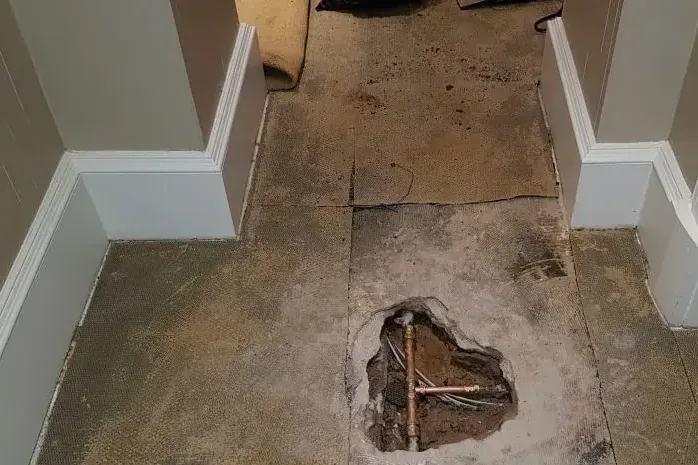
The essentials of slab leak water damage
Assembly identified
The actual substrate is established before access decisions, connecting the source assessment with the finishes and wall edges affected above it.
Plumbing coordinated
Pipe correction and material recovery have distinct access needs. A coordinated sequence keeps repaired plumbing from obscuring surfaces still requiring attention.
Floor layers evaluated
Lifting a finish can reveal moisture beneath it. Each retained layer needs a practical drying path and a clearly documented condition.
Installer handoff prepared
Source records and substrate findings help the flooring contractor understand the recovered area before selecting preparation for the replacement finish system.
What to do after slab leak water damage
- Mark the recurring damp area
Photograph the wet seam and surrounding finishes from a safe position. Record whether the patch changes after water use without deliberately running fixtures to reproduce it.
- Arrange pipe source assessment
An appropriate plumbing professional should investigate the suspected release. Avoid removing concrete or flooring solely on the basis of a surface stain or warm patch.
- Leave weakened finishes undisturbed
Raised edges and softened trim can break during handling. Keep traffic away and let the inspection determine which materials need access, protection or removal.
- Collect relevant repair records
Provide available flooring information and recent plumbing work details. Those records can help coordinate the source correction with the plan for drying and restoring affected assemblies.
What does slab leak water damage cost in Castaic, CA?
Slab leak recovery in Castaic varies with the wet footprint, finish layers and access required for drying. These cleanup ranges should be itemized separately from pipe locating, concrete opening and the plumbing repair itself.
Small affected edge
$1,500 to $3,000
- Localized finish damage
- Accessible damp perimeter
- Limited drying needs
Several connected rooms
$3,000 to $7,500
- Broader substrate contact
- Multiple floor transitions
- Connected wall checks
Extensive floor recovery
$7,500 to $12,000
- Widespread material access
- Complex finish removal
- Expanded drying documentation
Category, wet square footage, material class and delay before drying affect the scope. These are typical ranges, not a quote. Compare inputs in the water damage cost calculator.
How slab leak water damage progresses
Identify the construction and moisture pattern
The technician documents the floor assembly and tests damp areas to trace the water path. Measurements identify affected edges and connected surfaces, giving the plumbing and restoration scopes a shared starting point.
Coordinate repair access with cleanup
The source investigation determines where plumbing work belongs. Restoration access is planned around damaged finishes and hidden moisture, with retained surfaces protected from unnecessary disturbance during the combined work.
Dry the exposed retained layers
Once ongoing wetting is controlled, equipment supports moisture release from accessible materials. Repeat readings reveal whether floor edges or adjoining wall bottoms need a change in airflow or access.
Prepare the floor repair handoff
Final documentation describes the treated area and remaining finish preparation. The flooring installer can then assessment substrate conditions and product requirements before covering the surface that was involved in the leak.
A recurring wet patch in a Castaic floor deserves investigation even when no fixture is visibly overflowing. At a Hillcrest Park property, the inspection begins by identifying the floor assembly and tracing the source. If the building has a slab and plumbing below it is leaking, restoring the room requires coordination between pipe repair and the recovery of finishes exposed to migrating water.
Separate the source investigation from finish damage
The location of a swollen plank or damp baseboard may differ from the actual pipe problem. Water can move beneath a covering and appear at an accessible joint. A plumbing professional evaluates the supply system, while the restoration assessment maps moisture in flooring, wall bottoms and cabinets. Those findings should inform each other before openings are selected.
In Hasley Hills, the owner can help by describing when the patch first appeared and whether its size changes with fixture use. Observation supports the inspection without requiring removal of flooring by the occupant. Hot surfaces, electrical exposure or unstable finishes are reasons to keep the area undisturbed until it can be assessed.
Open only what the recovery requires
A repair opening and a drying opening serve different purposes. Reaching the pipe does not automatically expose all wet layers above the slab. Conversely, a damaged finish may need removal even when the pipe is reached elsewhere. The written plan should show the reason for each opening and describe protection for adjacent cabinets, doorways and retained surfaces.
- Examine transitions where moisture can spread underneath a different floor covering.
- Check lower wall materials beside the affected flooring for absorbed water.
- Document lifted or separated finishes before selective removal changes their appearance.
- Keep source repair debris separate from materials removed during water cleanup.
A floor patch that keeps returning needs a source investigation and a plan for the layers around it. Explain the visible changes and any plumbing findings already available for the property.
(888) 774-9605Discuss the damp floor seamWait for the substrate before rebuilding
A room in Williams Ranch may look ready once damaged flooring is gone, yet the exposed substrate can still hold moisture. Drying should respond to that material and the conditions around it. The drying and dehumidification page explains why readings at repeat locations matter more than a surface color change.
Before new flooring goes down, the owner needs a clear handoff covering the corrected source, retained materials and any remaining preparation. Flooring requirements may add checks beyond the restoration endpoint. Keeping plumbing records, cleanup photographs and moisture documentation together helps the installer evaluate the surface that will actually receive the replacement finish.
Safe access comes first
The response team keeps people away from wet electrical equipment and unstable ceilings. Occupants avoid entering contaminated water or disturbing soaked materials. Source isolation and safe access come before fans, cleaning or demolition, and the restoration assessment records those limits before work starts.
Slab leak water damage around Castaic
Properties in Hillcrest Park, Hasley Hills and Williams Ranch can discuss recurring floor dampness, available access and the status of the plumbing investigation before assessment.
The same service nearby: slab leak water damage in Newhall, Valencia, Stevenson Ranch.
Related water damage services in Castaic
Slab Leak Water Damage questions in Castaic, CA
Questions before work begins
A floor patch that keeps returning needs a source investigation and a plan for the layers around it. Explain the visible changes and any plumbing findings already available for the property.
(888) 774-9605Discuss the damp floor seamDoes a warm floor patch identify the broken pipe?
A warm area is a useful observation, but locating the source requires a plumbing assessment. The visible symptom can extend away from the release beneath a floor covering. Avoid cutting or lifting materials until the source investigation and access plan are established.
Can the room dry before the pipe is repaired?
Accessible water can be removed during stabilization, but continued leakage keeps adding moisture. Sustained drying needs control of the source. The cleanup team and plumbing professional should coordinate their work so equipment is not simply compensating for an active release.
Will every floor in the house need removal?
The affected materials and moisture map determine the scope. Damage in a connected covering may extend beyond the first visible patch, but each removal should have a reason. Ask which layers are wet, which are damaged and how retained sections will be checked.
How is the floor construction checked before leak cleanup?
The inspection identifies the construction at the specific building. Where another floor assembly exists, source tracing and drying follow that assembly instead. The recovery plan should describe the observed substrate and access needs rather than relying on the neighborhood name alone.
Why inspect walls when the leak is below flooring?
Moisture can reach the lower edges of nearby wall materials and cabinets. Those materials may remain wet after floor extraction. Checking them early helps prevent a narrow repair scope that replaces flooring while leaving another affected part of the room untreated.
What should the flooring installer receive afterward?
Useful records include source repair details, the removal footprint and moisture results for retained materials. The installer also needs to apply the replacement product's substrate requirements. A coordinated handoff makes any additional preparation visible before new flooring covers the repaired area.
Connect pipe correction with the recovery of affected finishes
Keep the room accessible for inspection while avoiding damaged edges, uncertain electrical areas and any unfinished source repair openings.
(888) 774-9605Assess substrate recovery