Slab Leak Water Damage in Newhall, CA
Newhall restoration pros trace the reach of water above a leaking slab, lift affected finishes where needed and dry the floor assembly after plumbing source control. Dispatch is available 24/7.
(888) 774-9605Wet slab? Start the assessment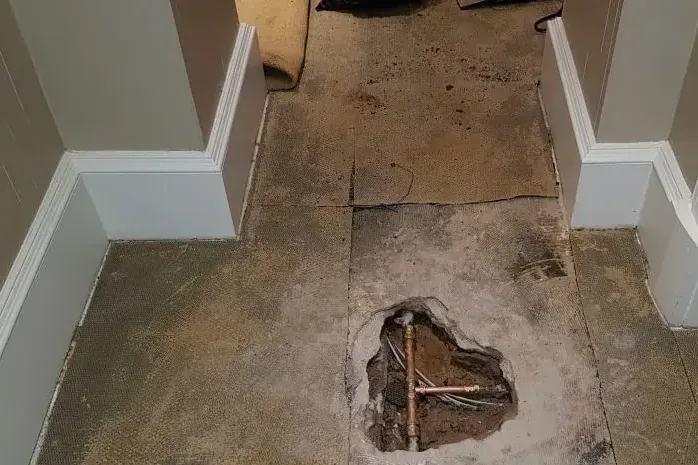
The essentials of slab leak water damage
Rapid local response
A hidden leak continues adding water until source control succeeds. Around-the-clock dispatch supports prompt damage assessment while the plumber evaluates the pipe and the household limits continued flow.
IICRC S500 drying standard
The drying plan considers dense concrete separately from absorbent wall materials. Instruments and material-specific goals replace guesses based on a dry-looking surface or a completed plumbing repair.
Claim-ready documentation
Photographs show the floor before opening, the wet layers and the access needed for drying. Daily measurements explain why equipment continues operating after the source has stopped.
Local water experts
Newhall Avenue, Sierra Highway and the historic community contain individual buildings with different assemblies. The assessment verifies each property instead of assuming every residence shares one foundation or pipe type.
What to do after slab leak water damage
- Limit the suspected supply leak
The household uses a safely reachable shutoff if water continues entering. A plumber evaluates meter behavior and fixtures before opening the floor.
- Mark visible changes
Photos capture lifted flooring, dark wall edges and damp cabinet bases. The owner notes when each sign appeared without guessing the underground route.
- Avoid covering the evidence
Rugs and new floor coverings can hide moisture. The affected area stays accessible until the technician completes a survey and agrees the access scope.
- Coordinate repair and drying
The plumbing and mitigation scopes identify who isolates the pipe and who verifies wet materials. Neither task substitutes for the other.
What does slab leak water damage cost in Newhall, CA?
Slab leak water-damage mitigation typically ranges from $1,500 to $7,500, with larger affected floor assemblies reaching $10,000 or more. Pipe location and repair are separate from drying, removal and replacement decisions.
Small affected edge
$1,500 to $3,000
- Moisture mapping
- Limited finish access
- Focused dehumidification
Several connected rooms
$3,000 to $7,500
- Broader flooring removal
- Wall-bottom checks
- Repeated drying measurements
Extensive floor recovery
$7,500 to $12,000
- Complex material access
- Dense assembly drying
- Detailed replacement handoff
Category, wet square footage, material class and delay before drying affect the scope. These are typical ranges, not a quote. Compare inputs in the Newhall water damage cost calculator.
How slab leak water damage progresses
Separate the causes
The technician compares floor symptoms with plumbing findings, checks whether water still enters and maps the affected rooms. The survey avoids treating a warm spot as a confirmed break location.
Open trapped layers
The mitigation crew documents finishes and underlayments that prevent access to retained water. Selective removal follows the assessed condition, contamination and ability to dry the material effectively.
Control moisture release
Dehumidification maintains a useful drying environment while airflow reaches exposed edges. The drying team checks room conditions and material response rather than assuming outside heat dries the concrete.
Verify the floor handoff
Final records distinguish remaining moisture concerns from completed plumbing work. The flooring installer receives the relevant condition information before choosing adhesive, underlayment or replacement installation timing.
A wet floor with no visible spill needs investigation before demolition. Along Newhall Avenue, SCV Water announced public-main replacement in 2025. The property’s private pipe requires its own plumbing investigation, followed by a survey of the wet floor assembly. Homes near Sierra Highway or Heritage Junction need a property-specific diagnosis. The mitigation team maps the damage while the plumbing assessment locates the source.
A floor symptom does not locate the leaking pipe
A warm area, unexplained meter activity or damp carpet can justify leak testing, but none identifies an exact break on its own. Water can travel beneath a finish and appear away from its origin. The technician records the visible edge and checks adjacent walls, closets and cabinet bases before recommending access. Thermal imaging helps locate temperature differences; moisture readings confirm whether those differences correspond to wet materials.
- The plumber distinguishes a supply leak from fixture leakage or another water source.
- The moisture survey extends beyond the discolored patch to adjoining floor transitions.
- The scope identifies flooring that prevents trapped water from evaporating.
- The drying record separates concrete readings from measurements of nearby wood and drywall.
Drying the slab means opening the right layers
Water beneath vinyl, laminate or adhered flooring can remain after the exposed surface feels dry. The crew evaluates whether a finish can be lifted and whether adhesive, padding or underlayment can remain. Targeted openings give damp edges a route to dry without treating the entire floor as one uniform material. A repaired pipe does not immediately remove water already absorbed into concrete.
The drying contractor tracks humidity and slab response, then compares replacement requirements with the flooring system being installed. A wood moisture target cannot simply be applied to concrete. Where damaged finishes require removal, photographs and material notes preserve the reason for that decision. Structural drying measurements continue after the plumbing work ends.
A damp floor can hide water beneath more than one finish. The restoration assessment maps the full affected assembly and coordinates drying with source repair before replacement starts.
(888) 774-9605Discuss moisture under the floorKeep plumbing repair and damage recovery clear
A repair estimate addresses the leaking pipe and its access. Mitigation covers extraction, affected materials, dehumidification and verification. Rebuilding and new floor installation may form another scope. Keeping these tasks separate prevents a pipe repair receipt from being mistaken for proof that the surrounding assembly is ready to close.
The EPA WaterSense leak information supports checking unexplained household water use. The Ready.gov household preparedness information supports planning for interrupted utilities. A plumber locates the failed pipe, and the mitigation contractor records moisture in the surrounding assembly. The owner submits those findings for the insurer’s policy review.
Safe access comes first
The response team keeps people away from wet electrical equipment and unstable ceilings. Occupants avoid entering contaminated water or disturbing soaked materials. Source isolation and safe access come before fans, cleaning or demolition, and the restoration assessment records those limits before work starts.
Slab leak water damage around Newhall
Coverage includes Old Town Newhall, Main Street, Sierra Highway and homes around William S. Hart Park. The service area includes ZIP 91321 and 91322.
Valencia, Stevenson Ranch, Castaic, Canyon Country and Acton are also in the service area.
Related water damage services in Newhall
Slab Leak Water Damage questions in Newhall, CA
Questions before work begins
A damp floor can hide water beneath more than one finish. The restoration assessment maps the full affected assembly and coordinates drying with source repair before replacement starts.
(888) 774-9605Discuss moisture under the floorDoes a warm floor prove a slab leak?
A warm area is a reason to investigate, particularly when water use changes or flooring becomes damp. Heating equipment and other conditions can also affect temperature. A plumber locates the source, while moisture readings establish whether the floor assembly contains water.
Can the flooring stay in place?
That depends on the material, water category, adhesive and access to retained moisture. Some finishes trap water underneath or lose their bond. The restoration scope documents what can remain and what prevents effective drying before removal proceeds.
Why is the wall wet when the pipe is below the floor?
Water can migrate across the slab surface and enter porous wall bottoms, trim or cabinet bases. Its visible exit may be away from the pipe failure. The technician follows the moisture pattern into adjoining spaces rather than limiting the survey to one floor spot.
Does repairing the pipe finish the job?
The repair stops the source but does not draw absorbed moisture out of concrete, underlayment or framing. Drying continues as a separate task. Replacement finishes should wait until the relevant material condition and installation requirements support closing the assembly.
What does insurance consider for a slab leak?
Policies can distinguish access, resulting damage, pipe repair and long-term seepage. The contractor records observed damage and the mitigation scope, while the insurer evaluates the policy. Separate estimates for plumbing access, pipe repair, drying and new flooring help the adjuster review each part of the claim.
How long does concrete drying take?
Dense concrete releases moisture differently from drywall or carpet. Thickness, flooring layers, saturation and indoor humidity all affect progress. The drying team tracks the trend and the replacement requirements instead of assigning the same number of days to every slab.
Give hidden floor moisture a measured drying plan
The drying team checks the slab, nearby walls and trapped layers before the floor closes again.
(888) 774-9605Arrange a floor moisture review