Burst Pipe Water Damage in Castaic
A broken supply pipe can soak several connected surfaces before the valve is closed. Recovery follows the water through walls, ceilings and flooring while the plumbing repair stops further release.
(888) 774-9605Discuss the pipe damage footprint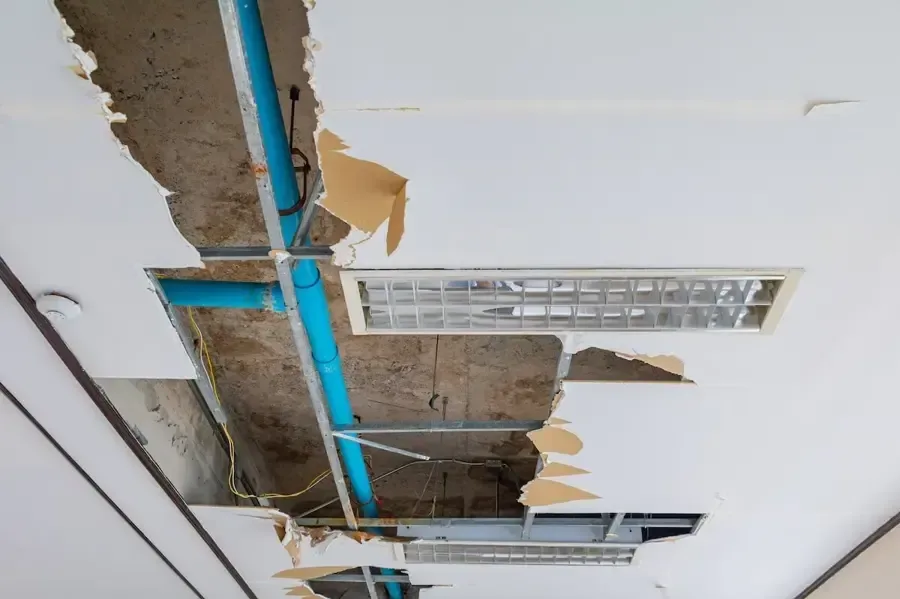
The essentials of burst pipe water damage
Release path mapped
Inspection starts at the pipe and follows connected finishes, including rooms where moisture appeared after the visible spray had already stopped.
Repair openings distinguished
The access needed for a fitting can differ from the openings required to remove insulation and dry the surrounding building assembly.
Levels connected
Overhead releases receive attention in the room below, with ceiling and wall connections included when the observed water route reaches them.
Closure planned
Recorded cavity conditions support a clear repair handoff, giving the finish contractor useful information before replacement materials conceal the treated area.
What to do after burst pipe water damage
- Close a safely reachable valve
A familiar supply shutoff can limit the release if the path is dry and safe. Avoid reaching through water or disturbing electrical equipment to operate it.
- Leave loaded ceilings alone
Keep everyone away from bulging or sagging overhead finishes. Do not puncture the surface or stand beneath it while trying to catch escaping water.
- Describe the release sequence
Note the room where spraying began and where water appeared afterward. Mention whether the supply is now controlled and whether plumbing assistance has been arranged.
- Prepare safe access information
Explain any locked utility space, obstructed room or affected stairway. Leave heavy wet contents in position until their movement can be included in the recovery plan.
What does burst pipe water damage cost in Castaic, CA?
Burst pipe cleanup in Castaic depends on affected levels, cavity access and the amount of wet material retained for drying. Pipe correction and finish reconstruction should appear separately when they are outside the restoration estimate.
One contained space
$1,000 to $2,500
- Localized water release
- Limited finish access
- Focused moisture checks
Walls and adjoining rooms
$2,500 to $6,000
- Connected cavity damage
- Broader floor extraction
- Selective insulation removal
Multiple affected levels
$6,000 to $12,000
- Overhead assembly access
- Expanded drying setup
- Coordinated interior repairs
Category, wet square footage, material class and delay before drying affect the scope. These are typical ranges, not a quote. Compare inputs in the water damage cost calculator.
How burst pipe water damage progresses
Confirm the supply is controlled
The assessment starts with the release location and the status of the plumbing repair. Unsafe areas are separated while accessible surfaces are checked to establish how far the water traveled.
Extract water and expose damaged layers
Floor level removal is paired with selective opening where wet finishes prevent inspection or drying. The work distinguishes the plumber's repair access from the additional access required for building recovery.
Track moisture through connected assemblies
Drying equipment is positioned around the actual wet footprint. Repeat measurements include cavity edges and adjacent rooms, allowing the setup to respond when concealed areas recover more slowly than exposed materials.
Assess closure and remaining repairs
The owner receives a description of treated assemblies and the recorded drying endpoint. Outstanding plumbing verification and finish replacement are identified before wall or ceiling openings are scheduled to be closed.
The sound of spraying water can end when a valve closes, while damage continues inside the assembly that received it. In a Castaic property, the first restoration inspection should connect the rupture location with every surface water reached. A Hasley Hills room with a wet wall may need attention at the floor below that wall as well as around the pipe itself.
Follow the release outward from the pipe
Water escaping under pressure can strike insulation, framing and the reverse side of finishes before collecting on the floor. The visible outlet from a cavity may be only one part of its travel path. An assessor uses observations and material readings to define that path, then chooses access that reveals wet layers without creating unnecessary openings throughout the room.
- Check both sides of an affected partition where access is available.
- Inspect ceiling connections when a pipe release occurred above occupied rooms.
- Record damaged trim and flooring before moving contents or opening finishes.
- Revisit neighboring spaces when water appeared there after the supply stopped.
Coordinate pipe repair with drying access
At a home in Williams Ranch, plumbing repair and restoration need a shared sequence. The plumber corrects the failed component; the cleanup scope deals with the water already released. A small repair opening may leave soaked insulation or wallboard concealed nearby. The owner should understand whether additional access is required for material removal or moisture recovery.
Pipe material and the reason for the failure belong in the property assessment. The plumber checks the exposed pipe, fittings and source of the release before recommending repairs. After source control, water extraction can reduce the liquid held at floor level before the broader drying setup is selected.
A controlled supply is the beginning of recovery. Describe the rupture location and the rooms that became wet so the assessment can connect the plumbing work with the damaged building assemblies.
(888) 774-9605Discuss the stopped pipe releaseRestore the assembly before concealing it
North Bluffs properties need the same attention to actual construction when a burst pipe wets a cavity. Retained framing and adjoining finishes are checked as drying progresses. Equipment placement should change if one enclosed edge stays wet while exposed surfaces improve. Closing the opening too early can trap moisture behind the repaired wall.
The final record should separate the repaired pipe from the remaining building work. Photographs of opened areas, readings from retained materials and a list of replacement finishes make that distinction clear. The repair contractor can then plan closure around the completed drying scope instead of relying on the absence of visible dripping.
Safe access comes first
The response team keeps people away from wet electrical equipment and unstable ceilings. Occupants avoid entering contaminated water or disturbing soaked materials. Source isolation and safe access come before fans, cleaning or demolition, and the restoration assessment records those limits before work starts.
Burst pipe water damage around Castaic
Pipe damage assessments include Hasley Hills, Williams Ranch and North Bluffs, with the release location, affected building levels and current shutoff status discussed before access.
The same service nearby: burst pipe water damage in Newhall, Valencia, Stevenson Ranch.
Related water damage services in Castaic
Burst Pipe Water Damage questions in Castaic, CA
Questions before work begins
A controlled supply is the beginning of recovery. Describe the rupture location and the rooms that became wet so the assessment can connect the plumbing work with the damaged building assemblies.
(888) 774-9605Discuss the stopped pipe releaseIs shutting the valve enough to stop the damage?
Closing the supply limits new water, but the released liquid can remain in insulation, flooring and wall cavities. Those materials need assessment and appropriate removal or drying. The stopped spray marks source control, while restoration addresses the effects already inside the building.
Can the damaged pipe be repaired through a small opening?
A plumber determines the access needed for the pipe repair. Restoration may require a different opening to reach soaked materials beyond that point. The owner should receive an explanation of both scopes so a repaired connection does not leave hidden wet layers untreated.
What should be reported about an upstairs release?
Describe the upper room, the ceiling below and any water appearing around fixtures or wall joints. Keep clear of sagging surfaces and wet electrical components. Those observations help plan the inspection without requiring occupants to open the assembly or test affected equipment.
Does a burst pipe identify a particular pipe material?
The actual component and failure mechanism require inspection. A sudden release can involve different fittings or pipe sections, and the neighborhood does not determine the answer. The plumbing findings should be recorded separately from the assessment of wet finishes and building materials.
Should saturated insulation be left inside the wall?
Its condition, water contact and ability to dry in place determine the decision. Insulation can obstruct access to other wet materials, so removal may be necessary. The scope should explain retained and removed layers rather than treating every cavity as a uniform assembly.
When can the wall be painted again?
Painting follows suitable repairs and completion of the required material drying. Covering a damp surface may hide staining temporarily while moisture remains behind it. Ask for the drying handoff and any preparation requirements before scheduling the finish contractor to close or coat the area.
Follow the water beyond the repaired connection
Keep photographs of the original spread and mention any ceiling movement, wet electrical components or inaccessible cavities during the first conversation.
(888) 774-9605Assess pipe damage recovery