Appliance Leak Water Damage in Valencia
A leak discovered beside an appliance may already extend beneath fixed cabinetry. Assessment follows the cycle history, water contact and floor transitions before deciding which finishes need opening for recovery.
(888) 774-9605Discuss wet cabinets and flooring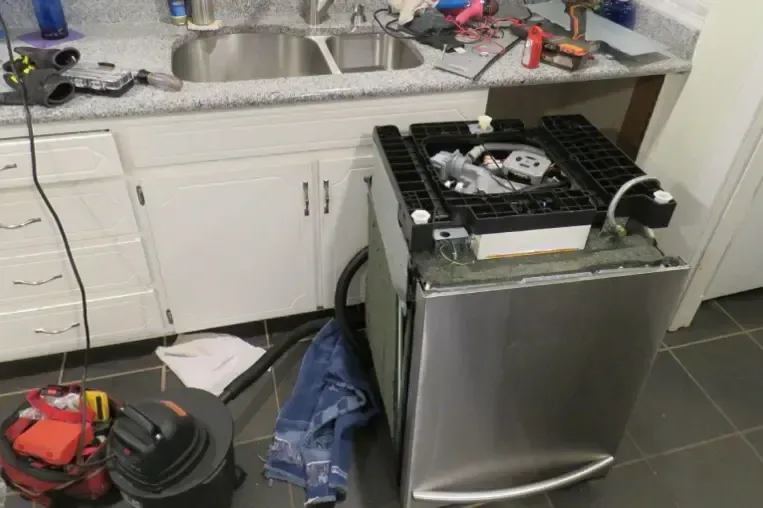
The essentials of appliance leak water damage
Cycle aware assessment
The equipment history helps explain water contact, while cabinet and floor observations establish the interior materials needing cleanup attention.
Cabinet junction access
Inspection looks at concealed base edges and nearby transitions instead of limiting the scope to the open floor beside the appliance.
Coordinated equipment movement
Repair access accounts for connections and adjacent dry finishes, allowing the building surfaces behind the appliance to receive a safe assessment.
Retention and appearance
Cabinet shape and floor integrity are considered alongside moisture, distinguishing material damage that needs repair from layers suitable for drying.
What to do after appliance leak water damage
- Pause appliance operation
Continued use can add water behind cabinets. Keep wet controls untouched and arrange equipment attention while the affected kitchen or laundry area stays out of use.
- Explain the cycle history
State whether the appliance was running when water appeared. Describe residue and the first damp edge to help connect source diagnosis with the interior assessment.
- Photograph cabinet changes
Record swelling and wet junctions from a safe position. Leave connected equipment and fixed finishes undisturbed until the inspection identifies the access needed behind them.
- Protect the work route
Relocate dry loose contents only along safe flooring. Explain alternative entrances so appliance repair and cleanup can reach the installation without crossing untouched storage areas.
What does appliance leak water damage cost in Valencia, CA?
Appliance leak recovery in Valencia depends on water beneath cabinets, flooring layers and nearby rooms. These ranges describe interior cleanup and drying; appliance diagnosis, replacement and connection repairs should appear as separately defined work.
Limited floor spill
$800 to $1,800
- Accessible water collection
- Localized edge inspection
- Focused finish assessment
Cabinet and flooring contact
$1,800 to $4,500
- Concealed base access
- Affected layer decisions
- Cabinet moisture checks
Multiple layers or rooms
$4,500 to $8,500
- Extended floor survey
- Broader material exposure
- Coordinated equipment access
Category, wet square footage, material class and delay before drying affect the scope. These are typical ranges, not a quote. Compare inputs in the water damage cost calculator.
How appliance leak water damage progresses
Connect the equipment history with damage
The assessment records the release timing and visible pattern around the installation. Appliance repair establishes safe access, while interior observations identify cabinet and flooring areas needing a closer inspection.
Inspect the concealed junctions
Measurements and suitable openings follow water beneath toe kicks, through thresholds and along wall bases. The scope describes affected layers individually so decisions about removal or retention can be understood before repair work starts.
Remove accessible water and expose layers
Extraction handles the water that can be collected, while justified access exposes retained wet materials. Cabinet components and flooring receive condition assessments that distinguish drying work from finish replacement or more extensive reconstruction needs.
Check readiness before routine use
Closing measurements describe the remaining assembly and any repairs still required. The handoff coordinates appliance operation, cabinet closure and flooring work so a repaired machine does not leave unresolved building damage hidden behind it.
A damp cabinet toe kick can be easier to miss than water across the middle of a kitchen. In Valencia, Mission Village provides a residential setting for household leak recovery. An appliance assessment needs the actual installation, cycle history and flooring arrangement. Water released behind equipment can reach the edges of a cabinet or disappear below a finish before the occupant sees a visible spill.
The appliance history helps explain the water
A supply connection leak and water released during a wash cycle can have different contact histories. Describe whether the appliance was running and where the water first appeared. Equipment diagnosis identifies the fault, while the interior inspection evaluates affected surfaces and handling needs. Repeatedly running the appliance to reproduce a leak can introduce more water into already wet materials.
Electrical connections and hidden hoses make casual movement risky. A safe access plan allows equipment repair and inspection of the building surfaces behind it without pulling on connections. Photographs of the original spill and cabinet edges help preserve the starting condition before any appliance is moved for approved repair work.
Look beneath the edge of the visible spill
Water can collect under a cabinet base or between flooring layers where ordinary surface wiping cannot reach it. Swelling, loosened finish joints and damp wall bases help identify areas needing closer inspection. Access decisions should distinguish damaged material from material that can remain once exposed and dried. The goal is a useful view of the wet assembly, not removal based solely on the appliance footprint.
- Inspect the junction between fixed cabinetry and the floor for concealed water travel.
- Compare adjacent room thresholds where flooring continues away from the appliance area.
- Record any cabinet distortion before finish removal changes its visible condition.
- Plan equipment access so dry counters, contents and nearby fixtures remain protected.
A spill beside an appliance can leave water under fixed finishes. Describe the cycle, cabinet changes and adjoining damp flooring to coordinate equipment attention with an inspection of the building materials.
(888) 774-9605Check the appliance spill damageCoordinate cabinetry decisions with the repair sequence
Westridge and properties around The Old Road provide additional local access context. Within each home, kitchen use, laundry access and storage needs affect how the work area is arranged. Dry belongings should remain separated from the cleanup path, especially where a narrow room provides the only route to the appliance.
Water extraction addresses accessible pooling, followed by drying measurements of retained floor and cabinet materials. Equipment repair should be complete before routine use resumes, and new trim should wait until it will no longer conceal a wet edge. The owner should receive a clear description of cabinetry or flooring work that remains after drying.
Safe access comes first
The response team keeps people away from wet electrical equipment and unstable ceilings. Occupants avoid entering contaminated water or disturbing soaked materials. Source isolation and safe access come before fans, cleaning or demolition, and the restoration assessment records those limits before work starts.
Appliance leak water damage around Valencia
Appliance damage assessments serve Valencia homes around Mission Village, Westridge and The Old Road, with recovery arranged around cabinet access and the equipment installation.
The same service nearby: appliance leak water damage in Newhall, Stevenson Ranch, Castaic.
Related water damage services in Valencia
Appliance Leak Water Damage questions in Valencia, CA
Questions before work begins
A spill beside an appliance can leave water under fixed finishes. Describe the cycle, cabinet changes and adjoining damp flooring to coordinate equipment attention with an inspection of the building materials.
(888) 774-9605Check the appliance spill damageCan a small dishwasher spill reach beneath cabinets?
Yes. Water can enter the junction at a cabinet base before spreading across open flooring. An inspection follows those edges and nearby wall surfaces to establish whether hidden layers need access, drying or material removal.
Should the appliance be run again to find the leak?
Repeated operation can add water to already affected materials. The equipment fault should receive an appropriate repair assessment. Describing the cycle and the original discovery can provide useful information without deliberately repeating the water release.
Does wiping the visible floor finish the cleanup?
Wiping can remove a surface puddle but cannot assess concealed layers or cabinet materials. Floor transitions and fixed edges need inspection when water has reached them. Measurements help establish whether moisture remains below the surface after the spill disappears.
Can a swollen cabinet panel dry back into shape?
Material condition determines whether retention is practical. Some cabinet components lose their shape or integrity after water contact. The assessment should distinguish drying from repairs needed for physical damage so appearance and moisture are both addressed.
Who should disconnect an appliance for access?
Connection work should be coordinated with appropriate equipment attention. Moving an appliance casually can strain hoses or expose wet electrical components. The interior inspection needs a safe access arrangement that also preserves the surfaces being evaluated behind it.
What should remain open during the drying stage?
Openings that provide necessary access to wet retained materials should stay available for measurements and airflow. The scope should explain those areas. Replacing trim too early can conceal a damp junction before its condition has been established.
Inspect beyond the visible kitchen puddle
The assessment identifies concealed access and retained layers needing drying before cabinets or flooring close the affected area again.
(888) 774-9605Discuss cabinet and floor recovery