Stevenson Ranch Water Heater Leak Cleanup
Replacing a leaking heater leaves the surrounding room to recover. Water beneath its base, along the closet edge or under an adjoining floor needs assessment while the equipment problem is handled by an appropriate professional.
(888) 774-9605Discuss water around the heater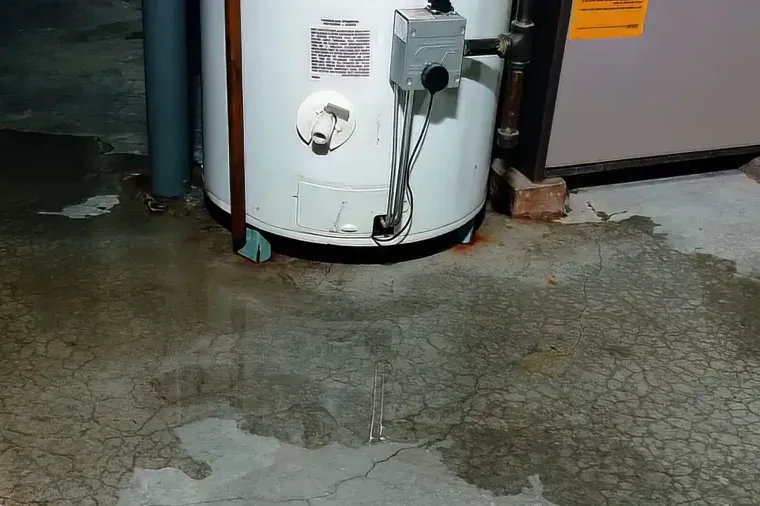
The essentials of water heater leak cleanup
Service timing
Equipment work can provide access to previously hidden surfaces, making coordinated inspection useful before a replacement installation blocks the same area.
Perimeter attention
The cleanup boundary includes damp trim and adjoining thresholds, extending the assessment beyond the water visible beside the heater.
Safe coordination
Equipment controls remain part of appropriate source service while the restoration scope addresses the surrounding wet building materials.
Installation record
Photographs of exposed floor and wall edges preserve the recovery findings before the serviced equipment returns to its position.
What to do after water heater leak cleanup
- Keep clear of the equipment
Water near equipment controls requires caution. Occupants should avoid touching wet components or changing unfamiliar settings, and an appropriate professional should handle safe isolation and source service.
- Describe the first visible water
Record whether moisture appeared at the base, a connection or an adjoining floor edge. Photographs from a dry position help preserve that observation before equipment work begins.
- Notify the responsible building contact
In a rental or managed property, the owner or manager should coordinate entry and equipment authorization. Mention any water reaching another room so access can include that area.
- Coordinate the surrounding inspection
If equipment is being moved or replaced, arrange assessment of the exposed floor and wall surfaces. That opportunity can reveal wet material otherwise hidden behind the installation.
What does water heater leak cleanup cost in Stevenson Ranch, CA?
Water heater cleanup in Stevenson Ranch is priced by the affected floor area, concealed edges and access around the installation. The heater repair or replacement is a separate task from recovering wet building materials and restoring damaged finishes.
Water near the heater
$750 to $1,750
- Accessible base cleanup
- Nearby surface readings
- Limited drying footprint
Wet closet or room edges
$1,750 to $4,000
- Perimeter trim access
- Enclosed material inspection
- Expanded drying placement
Spread beyond the installation
$4,000 to $7,500
- Adjoining flooring assessment
- Connected room recovery
- Broader finish removal
Category, wet square footage, material class and delay before drying affect the scope. These are typical ranges, not a quote. Compare inputs in the water damage cost calculator.
How water heater leak cleanup progresses
Assess source service and water spread
The assessment records the equipment problem, available repair information and the visible wet footprint. Access needs are coordinated so surfaces behind or beneath the installation can be evaluated when practical.
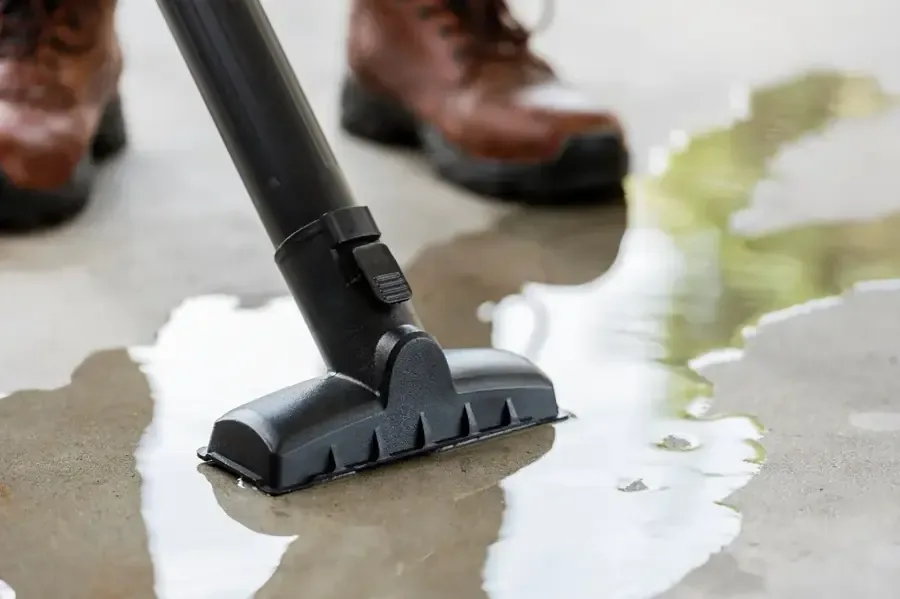
Remove pooling around the installation
Water collection focuses on the equipment area and connected floor edges. Stored contents and damaged finishes are assessed for handling, with attention to the route used to move them out.
Expose and dry the surrounding materials
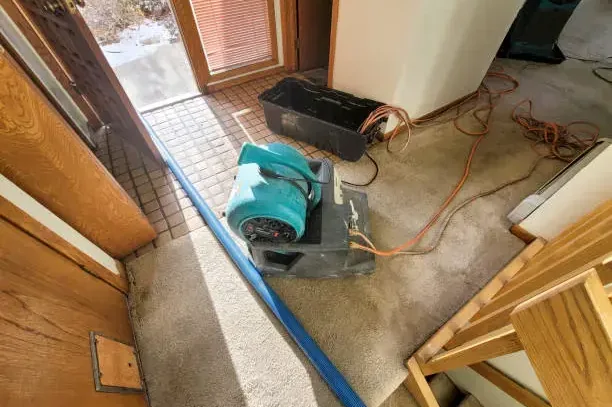
Selective access reaches damp backing, trim edges or adjacent cavities. Equipment placement follows the available space, and progress readings determine whether concealed areas need a different approach before they can recover.
Check the area before finishes return
The closing inspection addresses retained material moisture and the status of source service. The work record identifies remaining wall or flooring repairs so equipment completion and room restoration can be coordinated properly.
Water beside a heater often attracts attention to the tank first and the room second. Both need a plan. At a Stevenson Ranch property, the equipment professional handles the leaking component while the cleanup assessment examines where released water settled. A newly installed heater can conceal wet backing or a damp wall edge if the surrounding area is not evaluated before the replacement work is completed.
Use the service visit to improve access
The original approved development included single-family homes, condominiums and apartments. Heater access therefore needs to be described for the actual property: who controls the room, whether another occupant needs notice and what space is available around the equipment. Coordinating inspection with source service can make the surfaces behind the installation accessible before they are covered again.
Stevenson Ranch Elementary School and Pico Canyon Elementary School are in Stevenson Ranch proper. A nearby household reporting a heater leak should focus on the room conditions, including the first place water was seen and any damp threshold nearby. The installation's fuel type, controls and safe isolation should be handled through the appropriate equipment professional rather than improvised during cleanup.
Check the perimeter beyond the tank
Water may spread along the wall base or beneath a continuous floor covering before it forms a noticeable puddle. The inspection should follow those edges and evaluate contacted materials individually. A dry open floor can coexist with a saturated strip under trim. Removing accessible water helps reveal that boundary, while measurements determine which retained layers need further exposure and drying.
- Describe water found beyond the equipment room, especially at an adjoining doorway.
- Keep stored items away from the wet area until their handling is assessed.
- Retain photographs showing the equipment base before source service changes the scene.
- Coordinate removal of damaged finish material with the space needed for equipment work.
Surrounding finishes can stay wet after heater repairs. Describe the installation area, farthest damp edge and planned replacement work so room recovery can be coordinated with equipment service.
(888) 774-9605Discuss the heater area recoveryComplete the room recovery around the repaired source
Stevenson Ranch Parkway is a major community thoroughfare. For an affected property along that corridor, access arrangements during repeat drying checks matter just as much as entry for the equipment repair. The property contact should know which surrounding surfaces remain exposed and why the drying setup needs to remain undisturbed while moisture readings improve.
The water removal service addresses pooling that extends beyond the installation. A closing assessment should identify the repaired source, the wet materials treated and any finish replacement still needed. The aim is a recovered installation area, with the equipment problem and its effect on the building each accounted for in the final work record.
Safe access comes first
The response team keeps people away from wet electrical equipment and unstable ceilings. Occupants avoid entering contaminated water or disturbing soaked materials. Source isolation and safe access come before fans, cleaning or demolition, and the restoration assessment records those limits before work starts.
Water heater leak cleanup around Stevenson Ranch
Heater leak assessments address affected homes and managed residences across the community, coordinating installation access with the property contact and any adjoining room requiring moisture inspection.
The same service nearby: water heater leak cleanup in Newhall, Valencia, Castaic.
Water damage restoration in Stevenson Ranch · every town covered
Related water damage services in Stevenson Ranch
Water Heater Leak Cleanup questions in Stevenson Ranch, CA
Questions before work begins
Surrounding finishes can stay wet after heater repairs. Describe the installation area, farthest damp edge and planned replacement work so room recovery can be coordinated with equipment service.
(888) 774-9605Discuss the heater area recoveryDoes a new heater mean cleanup is complete?
Replacing the equipment resolves one part of the event. The floor, wall edges and any connected room still need assessment for retained water. Their recovery should be documented separately, especially where the new installation could limit access to previously wet surfaces.
Should stored items be pulled out immediately?
Items can be moved when a safe route and appropriate handling are available. Wet belongings should not be dragged across clean flooring. The assessment should identify which contents obstruct inspection and where they can be placed without spreading moisture.
Can water travel outside the heater room?
A doorway or continuous floor layer can allow water to reach adjoining materials. The inspection should include those transitions when symptoms point beyond the installation. Damp trim or a recurring wet seam can help identify where further measurements are useful.
Who should turn off unfamiliar controls?
An appropriate equipment professional should handle controls and isolation when the occupant is unfamiliar with the installation or wet components are present. Cleanup planning can begin with observations from a dry location while safe source service is arranged.
Why inspect during heater replacement?
Moving the equipment can expose floor and wall areas that are otherwise difficult to assess. Coordinated timing lets the restoration inspection evaluate those materials before access narrows again. The findings help determine whether further removal or drying is necessary.
What belongs in the final recovery record?
The record should distinguish equipment service from extraction, material access and drying. Photographs of the exposed installation area and final moisture findings explain the room's condition. Remaining finish repairs should be listed so the owner can arrange completion without overlooking damaged edges.
Check the floor beyond the tank
A focused inspection can identify concealed wet edges and the drying needed before trim, flooring or nearby wall finishes are restored.
(888) 774-9605Arrange an installation area assessment