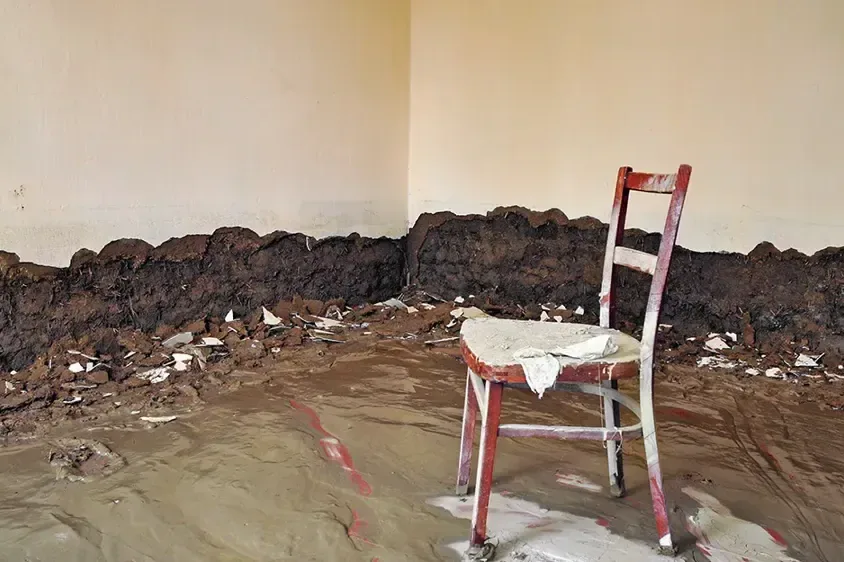
A summer storm brought flash flooding to Acton on August 3, 2017. Homes sustained interior water damage, businesses were damaged, and mud and debris spread through the community. When outside water leaves sediment inside a home, recovery needs a controlled plan for access, contaminated material, belongings and the wet structure beneath the visible residue.
Key takeaways
- Wait for safe access before entering a flooded building or crossing a damaged approach.
- Keep mud covered contents within the affected work area until handling is planned.
- Photograph sediment depth changes, debris and water marks without disturbing unstable materials.
- Assess porous finishes separately from hard surfaces that may be suitable for cleaning.
- Begin the retained material drying plan after the necessary removal and cleaning work.
Treat the approach to the home as part of access
The documented storm flooded roads and left debris across the community. During a new water event, the approach to a home needs its own safety assessment before indoor cleanup is considered.
Moving water, unstable ground or damaged access should keep occupants from attempting to reach belongings inside.
Acton lies between the Sierra Pelona Mountains and the San Gabriel Mountains. The owner can give the response team a clear description of the actual property entrance and visible access conditions.
The crew needs current observations about the route rather than a general description of the community's terrain.
The storm flood cleanup service begins with a safe work area and an assessment of water contact. The occupant should identify any obvious electrical exposure, unstable finish or blocked exit from outside the affected area.
Those conditions help determine which professionals must address access first.
- Stay out of flowing water and restricted areas.
- Describe debris blocking the property approach.
- Tell the crew about visible structural or electrical concerns.
- Keep a safe meeting point outside the damaged area.
Record mud patterns before cleanup changes them
Sediment at a doorway, wall base or furniture leg can help show where water moved and collected. Wide photographs should establish the room and entry route, while closer views can preserve residue on specific materials.
The record should connect those views with ordinary room names on a simple diagram.
An owner can describe when the water was first noticed and whether it rose, receded or returned. The description should focus on the observed sequence inside the property.
Later photographs may show a different boundary after drainage or movement, so keeping the original images helps preserve that early condition.
The August 2017 event also damaged local businesses and left mud across roads. For a present household recovery, each photograph should identify that household's own surfaces and belongings.
A property specific record makes it easier to explain the cleanup scope and avoid mixing the current loss with historical event material.
- Keep wide room views alongside close photographs of residue.
- Record debris against doors, furniture and wall bases.
- Label any room that could not yet be entered safely.
- Preserve original photographs before creating annotated copies.
Separate belongings before they spread residue
A muddy box or upholstered item can carry contamination into a room that remained unaffected. Contents handling should begin with a planned destination and route.
The owner can identify items of special importance while technicians evaluate contact, condition and whether specialized assessment is needed for the material.
Paper records, electrical items, soft furnishings and washable objects need different decisions. A single instruction to clean everything is too broad for those differences.
The inventory should describe each group, its original location and the treatment or disposal decision made by the appropriate person.
Photographing belongings before disposal preserves information about the loss. The owner should also coordinate any insurer documentation requirements as the response proceeds, while urgent hazard control continues.
Records can be updated as decisions are made so the contents list remains connected to the actual items handled.
- Choose a controlled holding area for affected belongings.
- Keep dry replacement supplies away from muddy contents.
- Label items awaiting specialist evaluation.
- Photograph disposal groups and retain their inventory entries.
Handle standing water and sediment as connected tasks
Mud can cover joints, conceal damaged finishes and interfere with access to the underlying surface. The crew should assess the amount and condition of sediment alongside any remaining liquid.
Removal methods need to suit the material present and the way the affected area is contained.
The water extraction service removes accessible liquid as part of that response. Sediment and unsalvageable porous material may require separate controlled handling.
Cleaning retained hard surfaces then prepares those materials for further assessment and the treatment appropriate to their water contact.
Opening a lower wall or lifting a finish can expose additional trapped residue. Those findings should be photographed and added to the scope, with the location clearly identified.
The record should explain why the crew extended work into a concealed layer rather than leaving the owner with an unexplained larger repair area.
Dry the retained structure after necessary cleaning
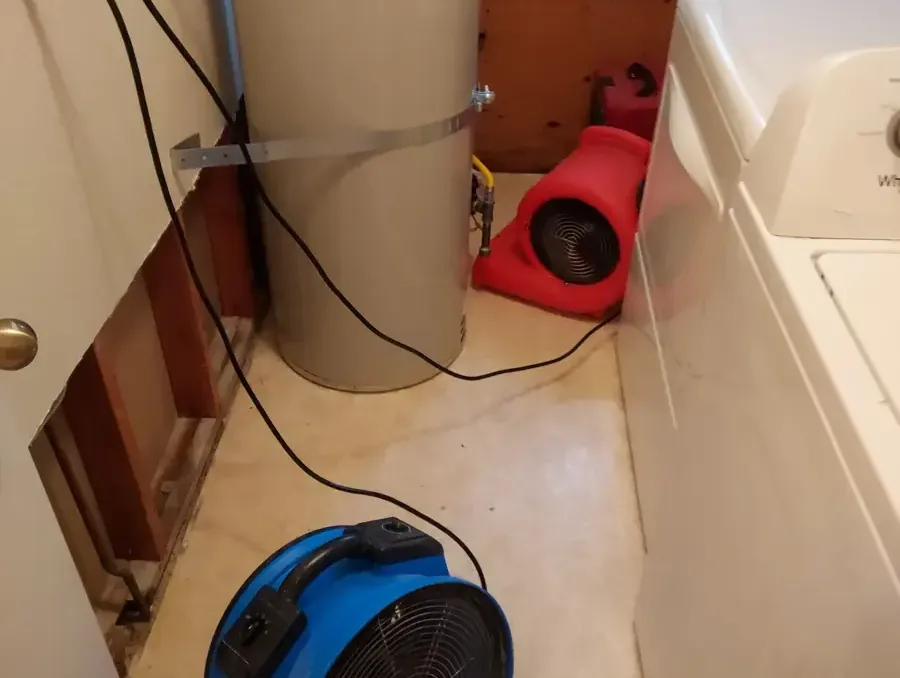
Evaporation is only part of recovery after sediment bearing water has entered a home. The material assessment and necessary removal and cleaning establish what can remain for drying.
Equipment should then be arranged around the retained assemblies and the environmental conditions needed to treat them.
The structural drying record should identify the material at each monitoring point. An exposed floor edge, wall cavity and solid framing member may need different interpretation.
Repeated checks help the crew decide whether the treatment is working and whether an inaccessible layer needs further investigation.
Household access should support the plan throughout treatment. Opening doors, relocating machines or moving stored belongings can affect the controlled area.
The owner should coordinate necessary use with the technician and receive clear updates when a room's status changes or equipment is adjusted.
- Identify the retained materials selected for monitoring.
- Keep measuring points and access openings available.
- Ask for an explanation when a concealed layer needs attention.
- Confirm the cleaning and drying status before scheduling finish replacement.
Bring the repair scope back to each damaged room
The closing file should connect original water entry, removed material, cleaned surfaces and final retained material conditions. Each room needs a clear status that the repair contractor can use.
This helps distinguish completed mitigation from finish replacement, source related work and belongings still awaiting a decision.
Acton housing includes ranch style homes and mountain homes overlooking the valley. The repair scope should describe the actual assembly at the property being restored, including layers exposed during cleanup.
Photographs and material notes show the opened layers, helping the contractor estimate repairs for the wall and floor assemblies at that property.
The owner can finish by checking that temporary storage locations, discarded items and remaining repair appointments are accounted for. A written list of unresolved work is useful during the return to ordinary household activity.
The list should identify the responsible contact for each task and the room where it applies.
Questions
Can flood mud be swept out before the crew arrives?
The affected area needs assessment before residue is disturbed. Sediment can conceal damage and carry contaminants into other rooms when handled casually. Occupants should stay outside unsafe areas and let the responding team establish an appropriate removal and containment method.
Why keep a contents inventory if items must be discarded?
The list preserves the identity, condition and location of belongings that will no longer be available for inspection. Photographs can support each disposal group. Keeping that information together helps the owner explain what was lost and organize replacement decisions afterward.
Is a clean looking floor ready for new covering?
The retained assembly still needs the relevant moisture evaluation and repair assessment. A surface can look clear while a concealed layer requires treatment. The contractor replacing the floor should receive the drying handoff for the area before covering it.
What belongs in the final room record?
Include the entry observations, photographs, removed materials, cleaning actions and final monitoring results. Add any finish or source repairs left for another trade. A room based record is easier to use when rebuilding work occurs over separate appointments.