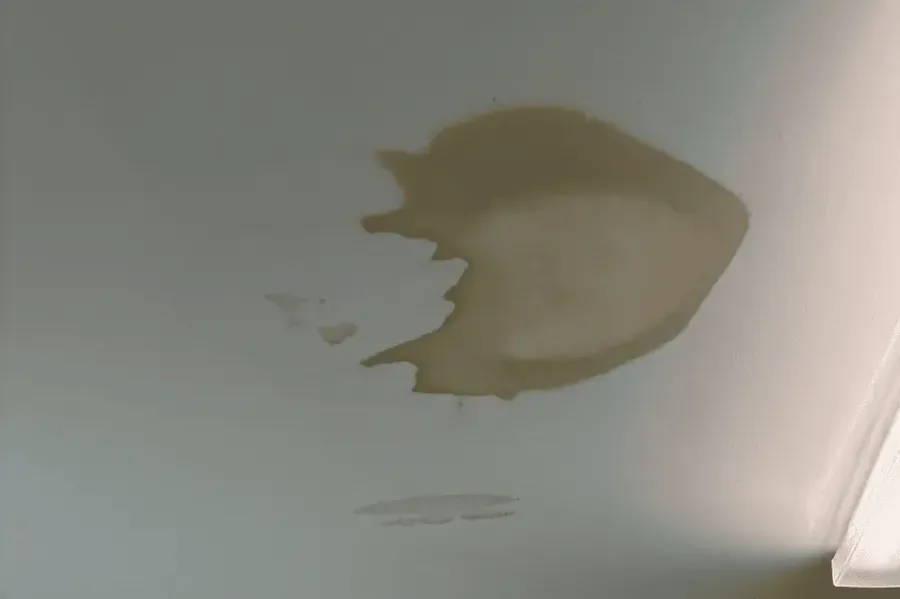
Stevenson Ranch's first approved development phase included houses, condominiums and apartments. In an attached building, water appearing on a ceiling can require access to more than the room where it becomes visible. The immediate task is to protect occupants, locate the source and coordinate inspection of the connected spaces without losing track of each dwelling's damage.
Key takeaways
- Keep people and belongings away from a sagging or actively leaking ceiling.
- Notify the property contact who can arrange access to connected dwellings.
- Give each room and dwelling a separate damage record.
- Let the repair professional trace the source before finish repairs are arranged.
- Retain access to the ceiling cavity until the relevant drying checks are complete.
Protect the room beneath the wet area
A ceiling stain should be approached from a safe position, especially when the surface sags, cracks or drips near electrical fittings. Occupants should leave the unstable area undisturbed and prevent others from entering it.
A photograph from the doorway can help the response team understand the situation without placing anyone beneath it.
Movable belongings can be protected only where safe access permits. A dry chair outside the affected boundary is different from a heavy cabinet directly under a failing ceiling.
The occupant should describe valuable or essential items to the crew so removal can be planned around the condition overhead.
The ceiling leak cleanup team evaluates the wet assembly before controlled access or removal. That evaluation includes the visible finish, the water route and any electrical concern requiring another professional.
Opening or puncturing a damaged ceiling is a task for appropriately equipped personnel.
- Keep children and pets outside the affected room.
- Do not touch a wet light fitting or switch.
- Photograph the stain without standing beneath a bulge.
- Tell the responding crew about any visible movement or falling material.
Arrange permission and access across dwellings
The person who notices water may not control access to the room above it. An occupant should notify the landlord, building manager or other appropriate property contact as soon as the issue is discovered.
That contact can help arrange entry while the repair professional determines which spaces need inspection.
Stevenson Ranch is an unincorporated community, and Westridge occupies its northern portion. Within a particular building, access arrangements depend on the actual ownership and occupancy.
The recovery conversation should identify who can authorize inspection, move furnishings and approve work in each affected dwelling.
A shared appointment can reduce repeated disruption when the plumber and restoration technician need the same opening. The property contact should confirm access before the visit and explain which rooms may be unavailable.
Each resident should receive a clear description of the planned activity in that resident's own space.
- Record a contact for every dwelling requiring access.
- Confirm keys or entry arrangements before work begins.
- Identify occupants who need advance notice of room closures.
- Keep authorization details attached to the relevant work area.
Trace water vertically and sideways
A drip below a bathroom or appliance calls for investigation of the actual source and the path through the building. Water can move along components before reaching the visible ceiling surface.
The repair professional should inspect the suspected supply, drain or equipment connection instead of locating the repair solely from the stain.
The room below also needs its own moisture survey. Wall tops, adjoining partitions and floor areas beneath the drip can be affected in different ways.
The survey should record which portions were inspected and where access was restricted so a later visit can complete any necessary checks.
Where water has collected on flooring, water extraction addresses the accessible liquid while the overhead problem is being controlled. Protecting the lower room may require temporary contents relocation.
That movement should be recorded separately from the repair work taking place above.
- Label the upstairs source area and downstairs damage area separately.
- Check connected wall surfaces along the observed water route.
- Record new findings when a ceiling opening exposes the cavity.
- Keep photographs oriented to recognizable room features.
Make a ceiling opening useful to every trade
Controlled access can reveal the failed component and the condition of insulation, framing and ceiling materials around it. The opening should be planned for safe diagnosis and treatment.
The property representative should understand which work is for source repair and which work is required to handle the wet assembly.
A plumber's completed repair does not automatically end the work in the cavity. Materials retained in place need assessment and, where appropriate, continued drying.
The restoration technician should explain which readings remain necessary before a finish contractor returns to close the ceiling and restore its appearance.
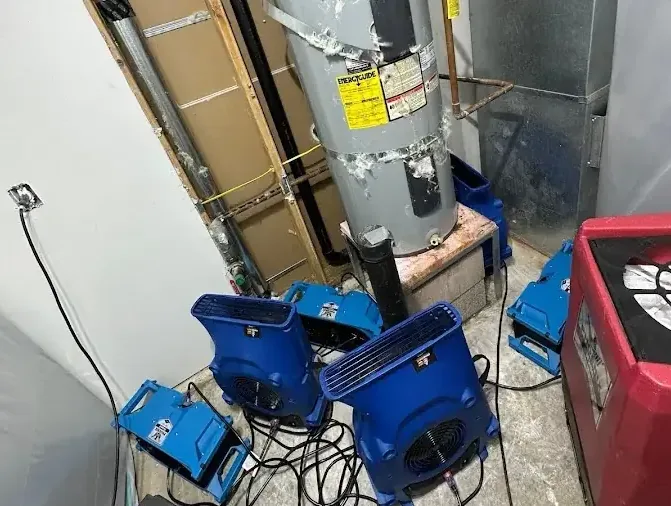
The structural drying process benefits from access that remains predictable. Residents should know whether equipment must stay in the lower room and whether further entry to the upper dwelling is expected.
A shared schedule makes those arrangements easier to maintain through the monitoring visits.
Keep each household's belongings identifiable
An attached building loss can generate photographs of similar rooms in different dwellings. The recovery file should label each image with the correct unit and room before it is shared.
This helps occupants find their own belongings and prevents a repair estimate from combining unrelated areas into a single description.
Contents moved out of the lower room should carry a simple record of where they were placed. Bedding, documents and furniture may need different handling based on their condition and contact with water.
The occupant can identify priorities while the restoration team determines safe access and treatment options.
Responsibility and coverage questions should be referred to the appropriate property representatives and insurers with the records available. The field file can show observed damage, source findings and work performed.
Keeping those descriptions precise helps the people evaluating the loss understand each dwelling's actual condition.
- Name the dwelling on every room diagram.
- Keep personal property lists separate for each household.
- Save repair photographs before finishes are restored.
- Record temporary storage locations for moved belongings.
Agree on the ceiling repair handoff
Before patching begins, the property contact should receive a clear statement about the source repair and the condition of retained materials. The drying record should identify the relevant cavity and any other affected surfaces.
If an additional inspection remains necessary, its location and purpose should be listed explicitly.
The ceiling contractor also needs practical information about access, contents protection and finish scope. Photographs of the opening and surrounding room help explain how far replacement extends.
The appointment should account for residents returning furniture or using the space after drying equipment has been removed.
A final walkthrough with the affected occupant can identify cosmetic repairs still pending and belongings still stored elsewhere. The upper dwelling may have a different remaining task from the room below.
Listing both clearly helps the building contact coordinate completion without relying on a single general update.
Questions
Should the occupant make a hole in a dripping ceiling?
The affected area should remain undisturbed until trained personnel assess stability and electrical exposure. The occupant can keep people away and describe the dripping location from a safe position. Controlled opening requires preparation for the material and water above the finish.
Why might the crew need access to another dwelling?
The source and the visible damage can lie in different rooms or levels. Inspection of the connected space helps the professionals trace the route and correct the problem. Entry should be arranged through the person authorized to provide access to that dwelling.
Can furniture stay in the room during treatment?
Its position depends on overhead stability, water contact and the access needed for work. The crew can assess whether an item can be protected in place or needs relocation. Any moved furniture should have a recorded destination so the resident can find it afterward.
What should be checked before the ceiling is patched?
The handoff should identify completed source work and the drying status of retained material around the opening. It should also note remaining inspections or repairs. The finish contractor needs that information before covering the cavity and restoring the room.