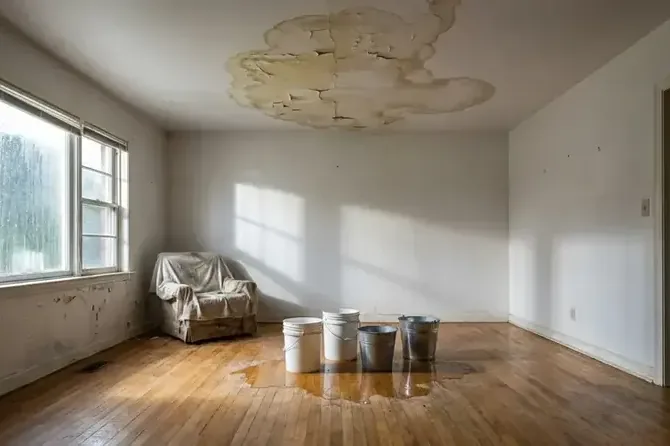
Newhall's regional climate has mild rainy winters and hot dry summers. A ceiling stain appearing during rain needs attention to both the roof and the interior assembly below it. The homeowner's useful first actions are to keep the room safe, record changes and arrange source inspection while the wet materials are assessed for cleanup and drying.
Key takeaways
- Keep clear of a ceiling that sags, cracks or leaks around an electrical fitting.
- Record the stain and note whether its appearance changes during rainfall.
- Leave roof and unsafe attic access to the appropriate professionals.
- Coordinate exterior source work with inspection of wet interior layers.
- Wait for the relevant drying assessment before painting or closing an opening.
Observe from a safe room boundary
A stain can be noticed before active dripping begins, or it can accompany a visibly softened ceiling. The homeowner should look from a stable, dry position and keep people away from any bulging material.
A room photograph can show the location without requiring anyone to stand directly beneath the damaged area.
Water near lighting, wiring or other electrical equipment requires appropriate professional attention. Moving belongings should wait where access would place someone under an unstable surface.
The owner can identify important items and their position so the response crew can plan safe protection or relocation during the initial visit.
The roof leak water damage service addresses the affected building interior while a roofing professional investigates the exterior source. Both need a description of what changed and where.
The first report should state whether water is still entering and which rooms are affected.
- Keep occupants away from sagging ceiling material.
- Do not handle wet fixtures or cords.
- Photograph the room from outside the unstable area.
- Describe any fresh drip or falling material when requesting help.
Use timing notes to support the inspection
A short record can note when the stain first appeared, when dripping was observed and whether the visible area changed with rainfall. Photographs taken from the same position make those changes easier to compare.
The owner should retain the original files so the inspection can follow the sequence.
The climate context makes winter rain a relevant part of the report, while the roof inspection focuses on the actual building. The roofing professional can assess the coverings, connections and other details appropriate to that roof.
Any temporary protection should be arranged by personnel equipped for the conditions.
The owner should also mention interior observations that may help the professionals coordinate, such as a newly wet wall corner or water appearing in an adjoining room. These details broaden the inspection route when needed.
They should be recorded as separate observations rather than absorbed into a general note about a ceiling stain.
- Keep successive photographs oriented to the same room features.
- Note whether dripping continued after rain eased.
- Record other wet surfaces discovered during the event.
- Save roofing findings with the corresponding date and room notes.
Follow the route through the overhead assembly
Water entering above a room can travel before it becomes visible on the ceiling. Inspection may need to include roof spaces, framing connections and insulation where safe access exists.
The professionals should identify the observed route and explain which interior materials require treatment along that path.
Attic entry brings its own access hazards, including unsupported surfaces and electrical concerns. The homeowner should not attempt to trace the leak by stepping into an unsafe overhead space.
A trained inspection can document the exposed conditions and provide photographs that connect them to the room below.
The ceiling water damage assessment considers finish stability as well as wetting. A small visible mark can sit below a larger affected area, so the response should follow inspection findings and measurements.
Any controlled opening should have a clear purpose and a recorded location.
- Ask which overhead layers were inspected.
- Keep roof space photographs connected to the affected room.
- Record access limits that require a later inspection.
- Identify the purpose of each proposed ceiling opening.
Roof repair and interior access
The roofer and restoration technician need to share the source status before the interior moves toward closure. Temporary protection, completed repair and a planned return visit have different meanings for the work schedule.
The homeowner should have a clear description of which status applies to the actual roof problem.
A ceiling opening may need to stay available after exterior work is complete so retained framing and adjacent materials can be checked. The finish contractor should know the reason for that access and the expected handoff.
Coordination avoids covering a cavity before the professionals have completed their assessment.
The work record should also show who is responsible for protecting the room during further rain. If conditions change, the homeowner needs a contact and a way to describe the new observation.
Recording fresh water separately helps the team adjust its inspection and treatment plan promptly.
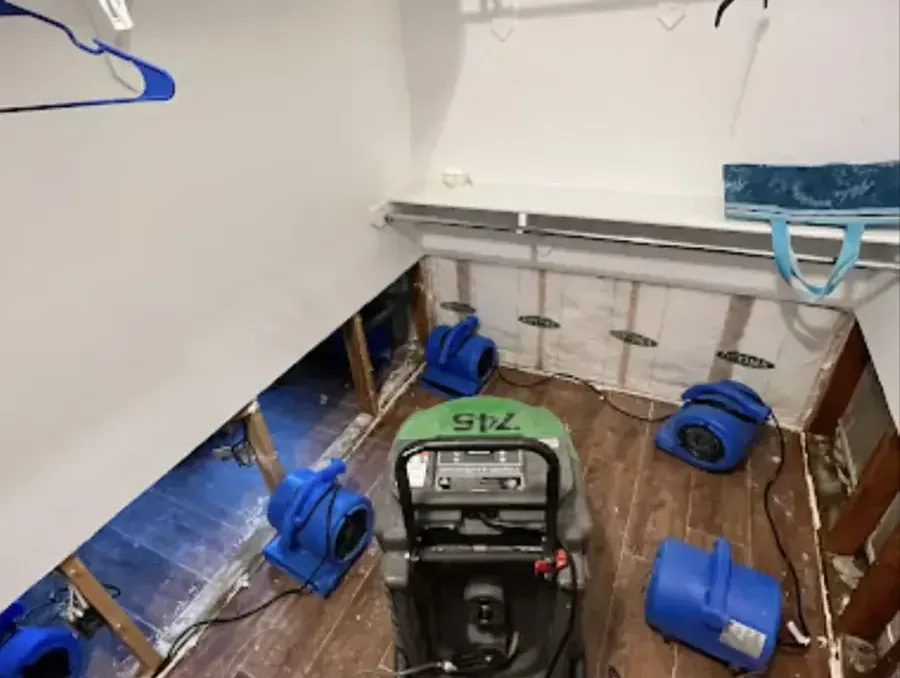
Track retained material through drying
Once the source is controlled and necessary material handling is complete, the retained assembly can be monitored during treatment. The technician should identify the framing or finish being measured and use repeatable positions.
This makes later readings comparable and helps explain why equipment remains in a particular room.
The structural drying service uses the material response and room conditions to adjust the plan. An accessible ceiling edge may improve while a concealed connection needs further attention.
The homeowner should receive a location specific explanation when an area requires additional access or a change in treatment.
Appearance is only part of the final assessment. A faded stain can remain on material that is otherwise ready for finish work, while a recently wet surface can look ordinary.
The handoff should connect repair readiness to the inspected assembly and recorded condition rather than the color of the painted ceiling.
- Keep the original monitoring positions identifiable.
- Ask what retained layer each reading represents.
- Discuss any necessary equipment movement with the crew.
- Share the final material record with the ceiling repair contractor.
Plan the patch around the whole affected area
The finish repair scope should identify removed ceiling sections, adjacent wall damage and any trim that needs attention. Photographs before closure help the contractor understand the opening and surrounding surfaces.
The owner can compare the proposed work with the mitigation record and ask about any difference in area.
Newhall is a community inside Santa Clarita, with Old Town Newhall as a cultural and business center. A household repair record should use the actual property and room information needed for its work.
Any question about applicable repair paperwork can then be directed with a specific scope and location.
After the room returns to use, the owner should retain the roofing and interior records together. If a new wet mark appears, the date and location can be compared with the earlier file.
That record supports a focused followup inspection while keeping the completed repair history available to the next professional.
Questions
Should a homeowner inspect the roof during rain?
Roof access should be left to professionals equipped for the surface and weather conditions. The homeowner can document indoor changes from a safe room position and report them. Exterior inspection and temporary protection need an arrangement suited to the actual roof.
Why can the visible stain be away from the entry point?
Water can travel along overhead components before reaching the ceiling finish. The inspecting professionals follow the route through accessible layers to locate the source and wet materials. The ceiling mark is a useful starting observation for that investigation.
Can a ceiling be painted as soon as dripping stops?
The source status and material condition should be checked before finish restoration. Retained layers may need treatment even when there is no active drip. The repair contractor should receive the relevant drying results and any remaining access requirements before painting or patching.
What should be reported if a stain returns?
Record where it appeared, when it changed and whether rainfall or another water event was occurring. Add a new photograph from the same safe viewpoint used previously. The roofing and restoration contacts can compare the new observations with the earlier repair and material records.