SCV Water announced a Newhall Avenue main replacement beginning August 18, 2025. The project replaced cast iron installed in 1967 with ductile iron. When a homeowner finds water indoors, the useful next step is to locate the building source, make access safe and document the wet rooms while the appropriate repair contact addresses the supply problem.
Key takeaways
- Report visible public water problems to the utility and indoor plumbing problems to the repair professional.
- Avoid wet electrical equipment and do not enter an unsafe room to reach a valve.
- Keep a dated note of shutoff, repair and any return of water.
- Photograph the pipe opening and affected finishes before restoration hides them.
- Confirm material dryness before closing the repair access.
Begin with the location of the water
A homeowner can make a helpful first report by describing where water is visible: outside along a roadway, inside a utility room, beneath a cabinet or coming through a ceiling. Each observation gives the responding professional a starting point.
The report should also state whether water is continuing to enter.
For an indoor release, access to an appropriate shutoff depends on its location and the conditions around it. A valve reached from a dry, stable area may allow the supply to be stopped safely.
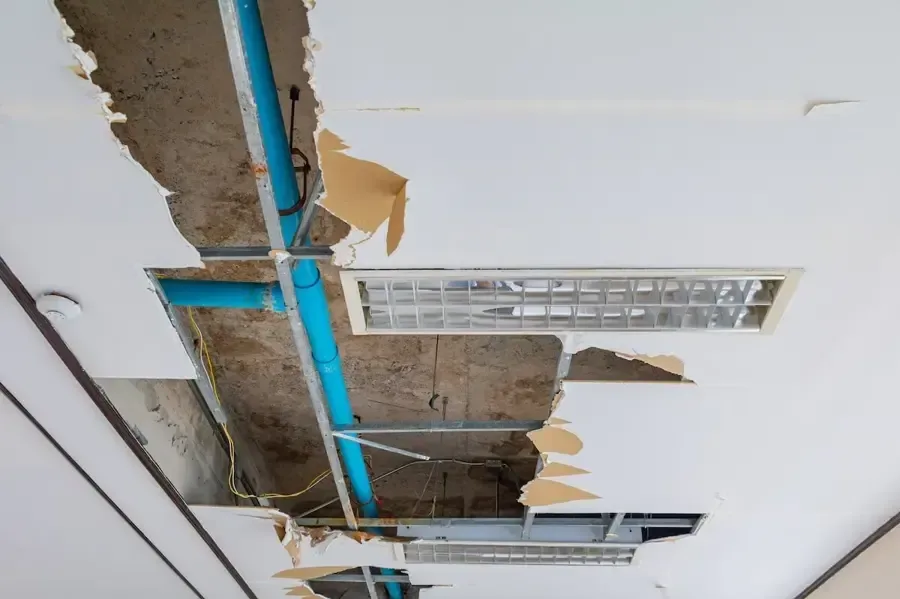
Standing water near electrical components or an unstable ceiling calls for keeping people out of the affected space.
The burst pipe water damage service addresses the wet building while a plumbing professional diagnoses and repairs the source. Keeping the tasks coordinated allows each team to understand what has been stopped, what is still active and where access is needed next.
- Describe the room and visible water route.
- State whether the supply has already been isolated.
- Identify wet outlets or overhead instability from a safe position.
- Keep photographs of exterior and interior conditions in separate groups.
Keep the utility notice with the correct repair record
The Newhall Avenue project concerns a public main and its replacement materials. An owner following that work can retain the utility notice alongside other service information.
A plumber inspecting a house should record the actual pipe, fitting or connection found at the building leak and describe the repair performed there.
Separate folders make those records easier to use. Utility correspondence can track the announced work or a reported public water issue, while the household repair file holds the diagnosed indoor source, invoices and photographs.
Both may be relevant to the owner's questions, but each should retain its own date and scope.
If service changes during the response, the owner can note when the change was observed and who was contacted. The repair professional can add any testing or observations made inside the building.
This creates a useful sequence for followup conversations without turning a nearby construction notice into an indoor diagnosis.
- Save the utility announcement in its original form.
- Ask the plumber to identify the repaired component.
- Record who authorized any shutoff or restoration of supply.
- Retain photographs taken before the pipe opening is covered.
Follow the release beyond the failed fitting
The area directly below a pipe can be only part of the wet building. Water may run along framing, gather behind a baseboard or appear in a room below the source.
Inspection should follow those connections and label the affected surfaces using room names the homeowner recognizes.
A moisture survey gives the restoration team a way to compare visible damage with retained materials around it. Readings near a cabinet base or floor transition can prompt further investigation even after puddles are gone.
Photographs of each test area help connect those findings with the original water route.
The first water removal visit should also account for contents that prevent access. A heavy bookcase or a full storage cupboard can hide a wet edge.
Technicians and the owner can agree on safe movement and temporary storage before the item is shifted.
- Include connected rooms and lower surfaces in the inspection.
- Mark reading locations so they can be revisited.
- Record water beneath movable furniture before cleaning it away.
- Keep the source opening accessible for the repair trade.
Use the repair opening as a coordination point
A wall or ceiling opening can serve both plumbing access and inspection of wet building materials. The professionals should agree on the opening needed for safe repair, then assess what is exposed.
Wet insulation, damaged wallboard and sound framing have different handling needs within that same cavity.
Closing the opening immediately after the pipe is repaired can interrupt the drying plan. The homeowner should ask which retained materials still need readings and who will confirm that finish replacement can proceed.
A specific answer tied to the exposed area is more useful than a general promise about drying speed.
Access photographs are worth keeping even when the opening is small. A clear view before closure shows the repaired component, surrounding materials and any remaining repair work.
The next contractor can use that record when estimating the patch rather than reopening finished work simply to understand the arrangement.
Measure the building after the supply returns
The plumbing professional handles the checks associated with returning the repaired supply to use. The restoration team then continues tracking the building surfaces affected by the earlier release.
The owner should report any fresh water promptly, including its location and whether it appeared during appliance or fixture use.
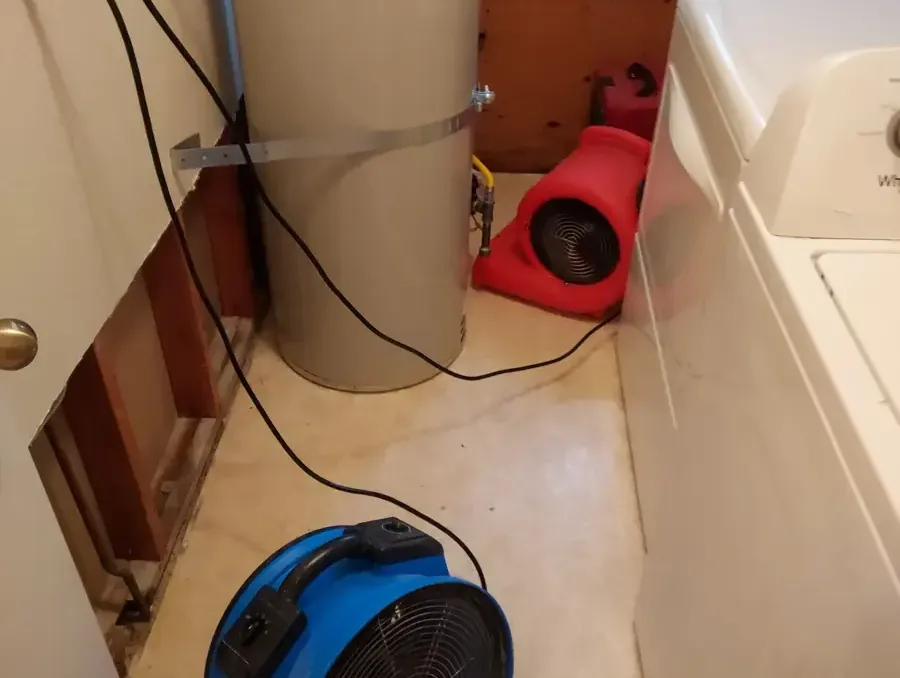
During structural drying, retained materials are assessed at repeatable positions. Air movement and dehumidification should suit the exposed assemblies and room conditions.
A dry surface at the center of the room does not replace checks at the original pipe opening or beneath the affected finish.
A renewed wet mark deserves a fresh inspection rather than an automatic extension of equipment use. The team needs to distinguish the response of existing damp material from additional water entering the assembly.
Accurate timing and location notes help the plumber and restoration technician focus their next checks.
- Note any new drip after a fixture is used.
- Keep monitoring points visible until readings are complete.
- Tell the crew before equipment must be moved.
- Arrange finish work after the drying handoff for that area.
Leave a repair file another person can follow
A useful household file begins with discovery and follows the work through source correction, removal, drying and finish repair. Each entry should identify the room or opening involved.
This structure lets an owner find the right invoice or photograph without relying on memory of which company visited first.
The final material record should explain what remained in place and what was removed. If a floor covering was lifted, the file should identify the area beneath it and the outcome of monitoring there.
When a ceiling patch remains outstanding, it should appear as a repair item with a clear location.
Newhall is a community within Santa Clarita. Any later question about the appropriate repair paperwork should be directed using the actual property and repair scope.
The mitigation record can support that conversation by showing the work performed and the conditions documented inside the building.
Questions
What information helps when reporting an indoor leak?
The first report should identify the affected room, whether water is still flowing, any safe shutoff already completed and hazards visible from outside the wet area. Photographs can follow once safe access is established. The repair professional needs the observed conditions before selecting diagnostic work.
Who should identify the pipe material in the house?
The plumber examining the exposed component can describe its material and connection. That description should be attached to the household repair record, preferably with a photograph. The identification can then support decisions about the specific damaged section and any further inspection.
Why is drying still needed after the fitting is replaced?
A repaired fitting stops that source, while absorbed water can remain in the surrounding assembly. Monitoring identifies the retained materials that still need treatment. The finish contractor should receive the relevant drying results before covering those areas.
What if another wet patch appears after service resumes?
The owner should report its location, appearance time and any fixture activity associated with it. The plumber can evaluate renewed leakage while the mitigation team checks the material condition. Fresh photographs are useful because the shape of the patch may change before inspection.