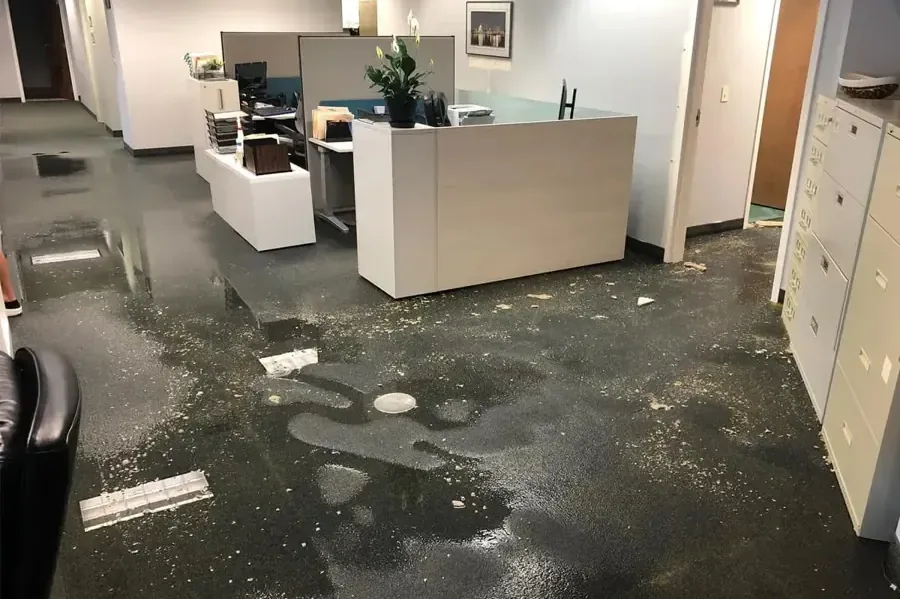
Old Town Newhall brings together restaurants, shops, theaters and a public library. Water inside a business creates an immediate problem of space: wet stock, equipment, employees and visitors can compete for the same doorway. A practical recovery plan assigns a place to each activity while the source is stopped and affected materials are assessed.
Key takeaways
- Close the affected customer area and keep an accessible exit route clear.
- Choose a dry stock holding space before cartons or displays are moved.
- Record product condition and shelf location together so inventory remains traceable.
- Keep cleaning, equipment placement and building repairs on an agreed access schedule.
- Reopening decisions should account for safe occupancy as well as dry materials.
Make the first closure easy to understand
A shop manager needs a clear boundary that staff can explain consistently. Water beside the entrance, beneath a display or around electrical equipment can affect access in different ways.
The initial closure should cover the actual hazard and prevent customers from walking through the recovery area to reach another aisle.
Main Street is part of the local business setting. For a shop there, the recovery conversation can identify the public entrance, delivery access and any alternate route available within the premises.
A technician can then evaluate where equipment and hoses fit without putting either workers or customers in conflict.
A written access arrangement is useful even for a small storefront. It names the person responsible for keys, identifies hours when stock can be moved, and records which rooms remain closed.
The commercial water damage service coordinates those practical details with the building inspection.
- Post a simple closure notice at the affected entrance.
- Keep delivery personnel outside wet work areas.
- Assign one contact for building access and manager updates.
- Preserve a clear route to exits throughout the work.
Give wet inventory its own record
Before shelves are emptied, photographs should show how goods were arranged and which packaging touched water. A carton on a damp floor needs a different description from a carton kept on an unaffected upper shelf.
Grouping everything under a single damaged stock entry loses information needed for later decisions.
An inventory sheet can use ordinary product names, quantities and existing stock identifiers. It should record the original location, visible condition and temporary storage location for each group.
Staff can add purchase records afterward without delaying the initial separation of affected merchandise from items that remained dry.
Food, electronics, paper products and washable fixtures require different assessments. Decisions about disposal or reuse belong with the people qualified to evaluate that stock and its intended use.
Keeping the materials separated preserves options and prevents a wet cardboard box from being set among clean replacement goods.
- Photograph shelf bases before rearranging merchandise.
- Label moved stock with its original room or display.
- Record discarded packaging before it leaves the premises.
- Keep receipts and supplier records with the inventory file.
Reserve a path for water removal
Extraction works more smoothly when the route from the wet floor to the equipment is planned first. Loose display pieces, rolling racks and stacked deliveries can block access to the perimeter.
Staff should identify movable objects while technicians determine whether the route is safe for workers and equipment.
The water extraction process removes accessible liquid, including water collected behind fixtures when access permits. A clean looking central aisle can still leave water trapped at cabinet bases or along a partition.
Those edges need inspection before a large display is returned to its usual position.
The equipment path also affects how the business receives deliveries. A manager can redirect stock to an unaffected receiving area when one is available and approved for use.
The arrangement should keep loading activity from repeatedly crossing the wet boundary or unplugging equipment needed for recovery.
- Identify fixtures that conceal floor edges.
- Ask who can authorize moving anchored displays.
- Keep hoses protected from carts and foot traffic.
- Record newly exposed wet areas as furniture is moved.
Match drying areas to the way the shop operates
A stockroom, sales floor and staff room may respond differently during drying because their materials and layouts differ. The work plan should identify retained flooring, wall finishes and fixed cabinetry in each space.
Moisture readings at those assemblies help determine where air movement and dehumidification are needed.
Temporary separation can help maintain the conditions selected for a drying area. Doors opening for deliveries or customers can change those conditions, so the manager and restoration team should agree on access.
An occupied dry room still needs a safe route that stays outside restricted work zones.
The structural drying plan should explain what will be checked at the next visit. A slow response beneath a counter may call for closer inspection or additional access.
Keeping that decision tied to the measured assembly helps the manager understand why a small corner remains unavailable.
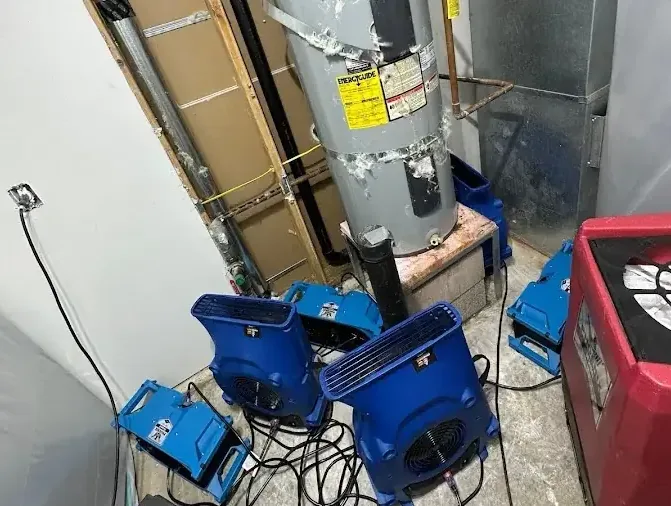
Keep source repair and finish work connected
The trade correcting a leaking pipe or another water source needs access to the same building without disrupting mitigation. The manager should share the intended repair location with the drying team before work begins.
That coordination can prevent a repaired wall from concealing material that still needs monitoring.
Removal records should describe each finish and the reason it was opened or taken out. Photographs of the exposed assembly are especially useful when a later contractor prices replacement.
A clear record connects the original wet area to the repair scope without asking the next contractor to reconstruct events.
Old Town also includes restaurants and theaters, where room functions can differ substantially from a retail shop. Each operator should identify the actual use of the affected space and the requirements for returning it to service.
The recovery file can then show which finish repairs and operational checks remain outstanding.
Set conditions for a useful reopening handoff
The final walkthrough should identify completed drying work, remaining source repairs and any surfaces awaiting replacement. These are separate items that deserve clear status descriptions.
A manager can use that list to schedule restocking, cleaning and contractor access without treating removal of equipment as permission for every activity.
The person accepting the handoff should receive the room diagram, relevant readings, inventory notes and photographs of exposed areas. Staff who were absent during the loss can then understand where stock was moved and which displays need attention.
Keeping the file together also reduces conflicting explanations between shifts.
Reopening may involve only part of the premises if safe access and operating requirements allow it. The decision should follow the condition of the actual rooms and the appropriate business approvals.
A dry stock holding area can be restored to its normal use once contents and pathways are ready.
- Walk the same room sequence used in the initial record.
- Confirm that temporary storage areas are accounted for.
- List repairs still requiring a separate contractor.
- Give staff a consistent description of the usable areas.
Questions
Should employees move every item out immediately?
An orderly move begins after the affected area is safe to enter. Staff can identify priorities and stock locations while the restoration team evaluates access, water condition and the handling needs of fixed fixtures. Unplanned movement can spread wet packaging into usable rooms.
Can deliveries continue during drying?
Deliveries need an agreed receiving point and a route that avoids equipment and restricted surfaces. The manager should tell suppliers about the arrangement before arrival. A workable route may change as the crew opens a different section of flooring or wall.
What belongs in the damaged stock list?
Useful entries identify the product, quantity, original position, observed contact with water and final disposition. Photographs should connect each entry to the item rather than showing only a broad pile of cartons. Existing purchasing records can support the inventory afterward.
Does equipment removal mean the shop can reopen?
The operator also needs to address remaining repairs, housekeeping, stock handling and safe customer access. The drying handoff explains the condition of treated materials. Business readiness should be checked against the premises and the work still scheduled there.